
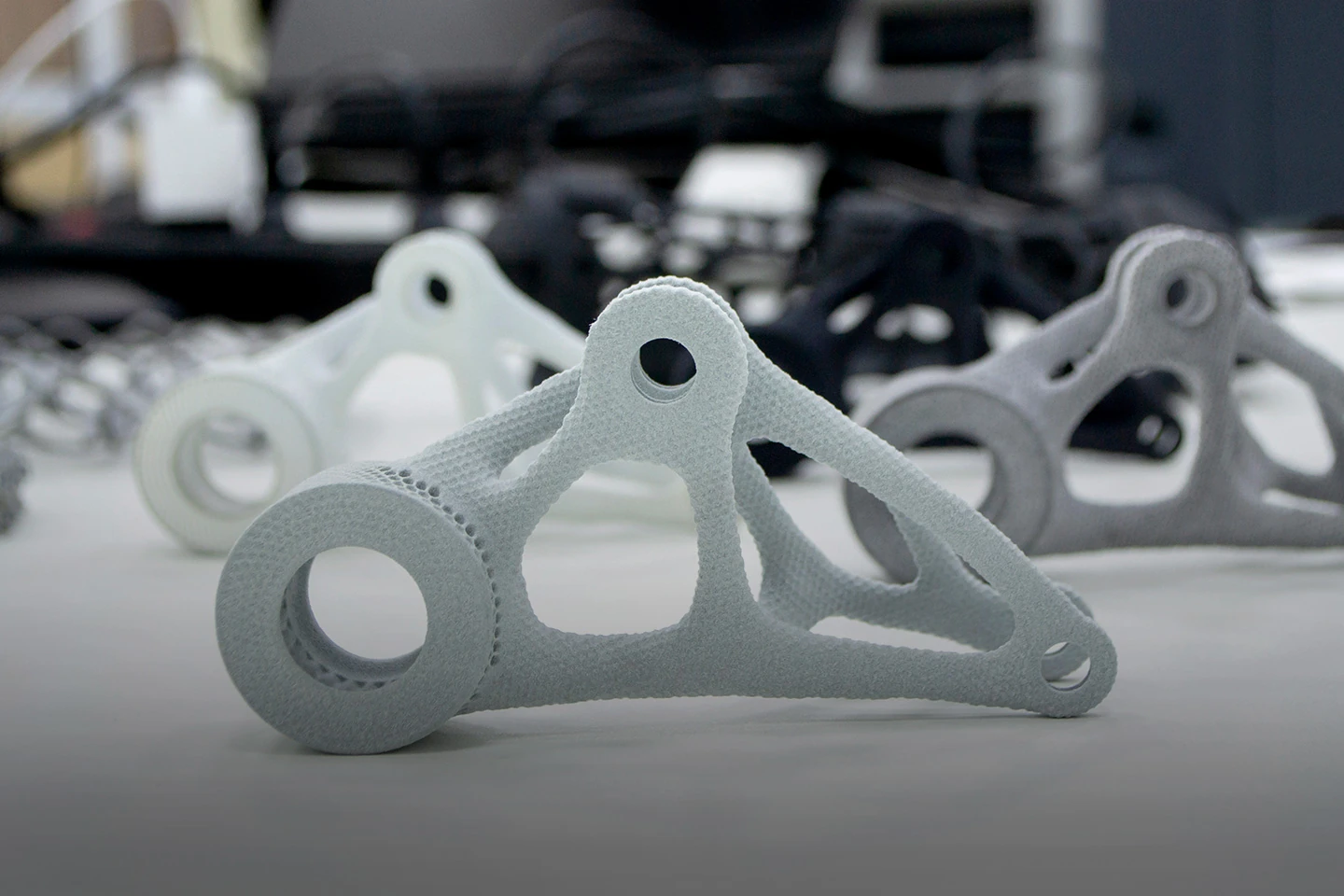
Many people assume that a prototype fails because the idea is not good enough.
In reality, in many cases, the problem lies in the process.
A product that looks promising at the beginning can fail once it enters the prototype stage. The shape may not match expectations, the function may not work, or the cost may suddenly increase. This often happens, especially for product developers or businesses developing a physical product for the first time.
In our practice, many clients come to us with problems that are actually quite common—and can often be avoided from the start.
This article will discuss the 5 most common reasons why product prototypes fail, and how to avoid them.
- Choosing the Wrong Material
One of the most common mistakes is choosing materials based only on assumptions, rather than actual needs. For example:
- Choosing a material that is too fragile for a functional product
- Or, on the other hand, using a material that is too expensive for the early stage
In fact, every material has different characteristics:
- strength
- flexibility
- heat resistance
- finishing
In our practice, we often find that prototypes fail not because the design is wrong, but because the material does not match the expected function.
The solution:
Choose the material based on the purpose of the prototype:
- is it only for visual purposes?
- is it for functional testing?
- or is it meant to simulate the final product?
- The Design Is Not Ready for Production
Many designs look good on screen, but run into problems when made physically.
Common examples include:
- dimensions that are too thin
- structures that are not strong enough
- details that are too complex to produce
This usually happens because the design is created without considering the production process or manufacturing constraints.
In our practice, we often find design files that need to be revised before they can move on to 3D printing or prototyping.
Important insight:
Design for visual purposes ≠ design for production
The solution:
Make sure the design has considered:
- minimum thickness
- structural strength
- tolerance between components
- Not Testing Iteratively
Many people want the prototype to be “perfect in one go”.
In reality, a prototype should go through several iterations.
Common mistakes include:
- going straight to production without testing
- or creating only one version without any revision
As a result, when an error occurs, the cost becomes higher and more time is wasted.
In our practice, projects that run smoothly usually go through several stages:
- Initial prototype (basic)
- Testing & evaluation
- Revision
- Final prototype
The solution:
Treat prototyping as a process, not the final result.
- Unrealistic Expectations on Time & Cost
This often happens, especially in the early stages of a project.
Some unrealistic expectations include:
- wanting fast results without compromising quality
- wanting low cost while still expecting high detail
- assuming that every process can be instant
In reality, there are trade-offs that need to be understood:
- faster = usually more expensive
- more detailed = requires more time
In our practice, many challenges happen because the initial expectations are not aligned with the reality of production.
The solution:
Discuss realistic timelines, suitable budgets, and main priorities from the beginning, whether the focus is speed, quality, or cost.
- Lack of Validation Before Production
Many prototypes are made without enough validation. For example:
- not tested with users
- not tested in terms of real functionality
- not checked against market needs
As a result, the product becomes less relevant and requires major revisions at the final stage.
In fact, the earlier validation is done, the lower the risk of failure.
The solution:
Validate from the beginning:
- test the function
- test the form
- test the usability
Why Is the Prototyping Process Important?
From all the points above, we can conclude that:
- Prototype failure rarely happens because of the idea
- It often happens because of an improper process
A good prototype is not only about being “made”. It also needs to be planned, tested, and refined.
For product development needs, technologies such as 3D printing and prototyping allow this process to run faster and more flexibly, as long as they are used with the right approach.
Need Help with Product Prototyping?
If you are developing a product and want to make sure the prototyping process runs more effectively, it is important to work with a team that understands not only the technology, but also the process.
From material selection, design adjustment, to the production process, every stage plays an important role in determining the final result.
The Jadi 3D team can help you through this process, from idea to a prototype that is ready to be tested.
Discuss your prototype needs with our team to get a more suitable and efficient solution.